PsoriasisKushtam (specifically Vella Kushtam or Senthamara Kushtam) — classical name in Siddha
See all treatment approaches for Psoriasis →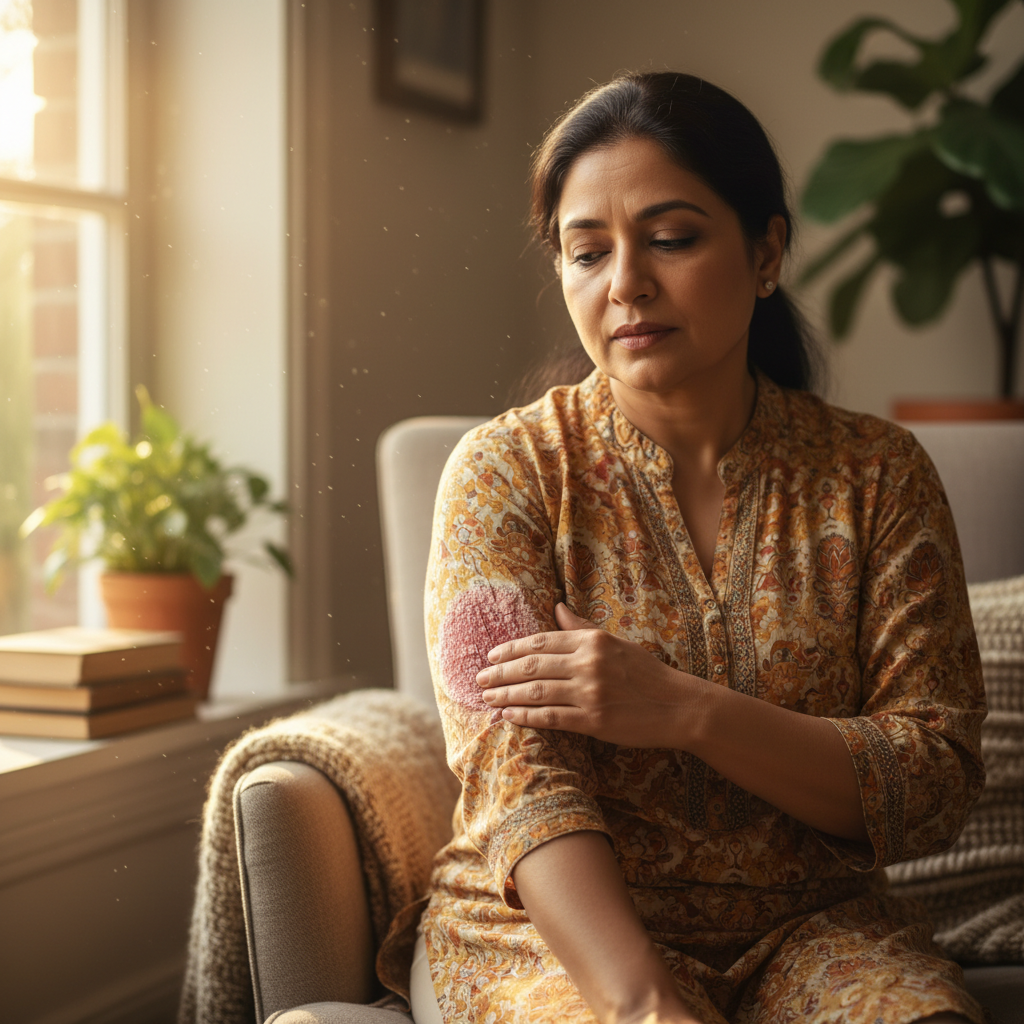
Overview
Psoriasis is a common, non-contagious skin condition characterized by rapid skin cell reproduction. This rapid growth leads to the formation of red, dry patches of thickened skin covered with flaky scales. While it can manifest mildly with faint dry patches, severe cases can cover the entire body with thick, red, scaly skin. Psoriasis is a chronic condition with a variable course, often improving and worsening over time, and is seen worldwide across all races and sexes, typically first diagnosed in early adulthood.
The exact cause of psoriasis remains unknown, but it is believed to be a complex interplay of genetic predisposition and environmental factors, with extreme climates sometimes acting as triggers. There is a strong familial link, suggesting a genetic component. The immune system is also thought to play a significant role in the rapid skin cell reproduction, which occurs at a rate four times faster than normal epidermal production.
From a Siddha perspective, while the exact etiology is still under investigation, the condition is understood to involve imbalances within the body's systems. The rapid proliferation of skin cells and the resulting inflammation are key features. While modern medicine may focus on managing symptoms, Siddha emphasizes addressing the underlying causes through holistic approaches, considering factors like diet, lifestyle, and environmental influences that can trigger or exacerbate the condition.
Causes According to Siddha
- ❌ The exact cause of psoriasis remains unknown.
- 🧬 There may be a combination of genetic predisposition and environmental factors that trigger the disease.
- 🌡️ Extreme climates can trigger the disease.
- 👨👩👧👦 Psoriasis is often found in members of the same family.
- 🛡️ The immune system is thought to play a major role in the development of psoriasis.
- 🔬 Extensive research is ongoing to identify the underlying agent causing psoriasis.
- 📈 Rapid skin cell reproduction, occurring at a rate four times faster than normal skin production, is a characteristic of psoriasis.
Signs & Symptoms Recognised in Siddha
- Rapid skin cell reproduction leading to red, dry patches of thickened skin.
- Dry flakes and skin scales resulting from the rapid buildup of skin cells.
- Commonly affects the skin of the elbows, knees, and scalp.
- Psoriasis can range from mild, with small, faint dry skin patches, to severe, where the entire body is covered with thick, red, scaly skin.
- It is a chronic skin condition with a variable course, periodically improving and worsening.
- Symptoms may worsen in colder winter months.
- Many individuals report improvement in warmer months, climates, or with increased sunlight exposure.
- The condition is seen worldwide, in all races, and both sexes.
- It is most commonly diagnosed in early adult years.
- Patients may experience social embarrassment, emotional distress, and other personal issues due to the skin's appearance.
Herbs & Natural Substances
Therapeutic Approaches in Siddha
Siddha medicine emphasizes a holistic approach to managing psoriasis, focusing on both internal and external treatments. Internal remedies often involve herbal formulations aimed at purifying the blood and improving overall skin health. These may include herbs known for their anti-inflammatory and skin-regenerating properties, helping to address the root cause of rapid skin cell reproduction.
External applications are crucial in providing symptomatic relief and aiding the healing process. Various medicated oils, pastes, and poultices are prepared using specific herbs and minerals. These topical treatments are designed to soothe itching, reduce redness, and promote the shedding of scales, thereby improving the skin's texture and appearance. The application of these external remedies is carefully chosen based on the specific presentation of the psoriasis.
Traditional Siddha practices may also incorporate dietary modifications and lifestyle adjustments to complement medicinal treatments. Avoiding certain foods that are believed to aggravate skin conditions and advocating for the use of cotton garments are common recommendations. Bathing practices are also adjusted, with a substitution of harsh soaps for gentler alternatives like bath powders made from green gram and bengal gram.
Dietary Guidance
✓ Favour
- Cotton garments
- Bath powders made of Green gram
- Bath powders made of Bengal gram
✗ Avoid
- Soaps
Lifestyle & Daily Routine
- ✅ Advocate for the use of cotton garments.
- ❌ Avoid the use of soaps.
- ✅ Substitute soaps with bath powders made from Green gram and Bengal gram.
- ☀️ Increased sunlight exposure may lead to improvement in symptoms.
- ❄️ Symptoms may worsen during the colder winter months.
- 🧠 Psoriasis can lead to emotional distress and personal issues due to skin appearance.
- 🧘 Engage in practices that help manage stress, as emotional distress is a factor.
- 😴 Ensure adequate rest, as the condition has a variable course and can periodically improve and worsen.
Community Experiences
Share your personal experience with Siddha for Psoriasis. All experiences are reviewed before being published.
Have you tried Siddha for this condition?
Login to share your experience and help others on their wellness journey.
Login to Share