PsoriasisEka Kushta — classical name in Ayurveda
See all treatment approaches for Psoriasis →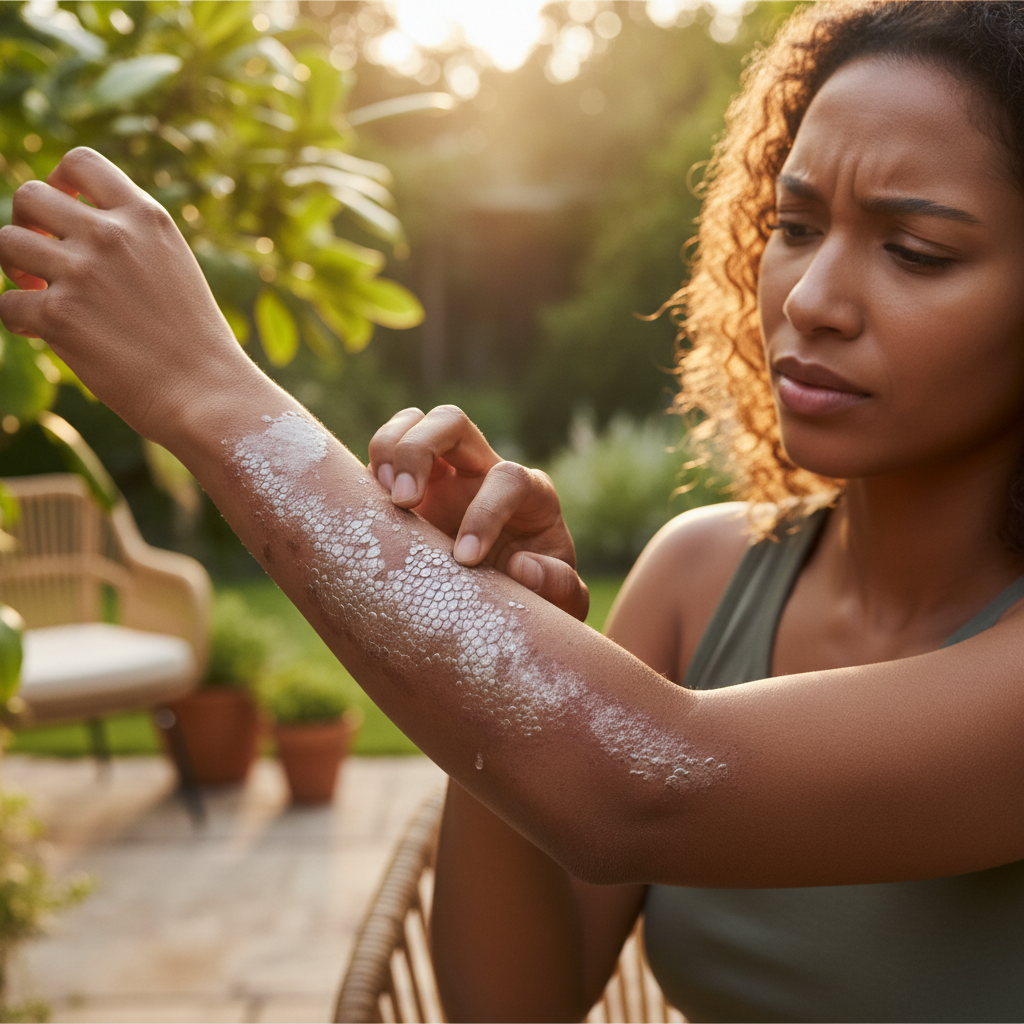
Overview
In Ayurveda, Psoriasis is known as Kitibha or Ekakushta. It is recognized as a common, non-specific skin disorder characterized by distinct clinical features. These typically include rounded, reddish or blackish patches on the skin, often covered with silvery scales, and accompanied by itching. The condition can also present with rough or slimy skin, sometimes with exudation, and is known for its recurrent nature.
Ayurveda views Ekakushta as one of the eleven Kshudra Kushta, where imbalances in Vata and Kapha doshas play a dominant role. It is described as presenting with silvery plaques resembling fish scales, which may be itchy and have a tendency to spread. Faulty dietary habits and psychogenic stress are considered significant factors in its pathogenesis, distinguishing the Ayurvedic perspective from purely biomedical understandings.
The condition is defined by the presence of dry, scaling, erythematous or maculopapulous patches. These patches are covered with adherent, silvery-white scales and may or may not be associated with itching. While it can be correlated with psoriasis, Ayurveda also differentiates it from similar conditions like Sidhma (white, shiny patches with dust-like exfoliation) and Dadru (circular patches with elevated borders and severe itching).
Causes According to Ayurveda
- ✅ Faulty dietary habits
- 🧠 Psychogenic stress
Signs & Symptoms Recognised in Ayurveda
- ✅ Reddish/blakish rounded patches of skin with silver scales and itching.
- ✅ Rough or slimy skin texture.
- ✅ Sometimes associated exudation (discharge).
- ✅ Recurrent nature of the condition.
- ✅ Silvery plaques resembling fish scales.
- ✅ May be associated with itching.
- ✅ Tendency to spread all over the body.
- ✅ Dry scaling erythematous / maculopapulous patches.
- ✅ Adherent silvery white scales.
- ✅ Patches may or may not be associated with itching.
Herbs & Natural Substances
Therapeutic Approaches in Ayurveda
In Ayurveda, the treatment of Kitibha (Psoriasis) involves a multi-pronged approach focusing on internal cleansing, herbal remedies, and lifestyle modifications. Internal treatments often include the administration of herbal decoctions (Kwatha) and medicated ghees (Ghrita), which are believed to pacify the aggravated doshas (Vata and Kapha) responsible for the condition. Specific herbal formulations in powder (Churna) or tablet (Vati) form are also prescribed to address the underlying imbalances.
External applications and procedural therapies play a significant role in managing Psoriasis. Procedures such as Vamana (therapeutic emesis), Virechana (therapeutic purgation), and Raktamokshana (bloodletting, including Siravedha and Jalookavacharana) are indicated to purify the body and eliminate toxins. These procedures aim to cleanse the system and alleviate the symptoms of the skin disorder.
Preventive measures and health-promoting tips are integral to the Ayurvedic management of Kitibha. This includes strict adherence to dietary guidelines, avoiding certain foods like curd, tomato, and high-fat items, while favoring a high-protein diet with specific grains like old rice and wheat. Lifestyle adjustments, including stress management, are also emphasized to support the healing process and prevent recurrence.
Dietary Guidance
✓ Favour
- High protein diet
- Old Rice
- Wheat
- Munga dal
✗ Avoid
- Urad (black gram)
- Curd
- Tomato
- Brinjal
- High fat diet
- Fried food
- Fish
- Meats
- Sour food
- Spicy food
Lifestyle & Daily Routine
- ✅ Maintain regular dietary habits.
- ❌ Avoid irregular dietary habits.
- 😴 Ensure adequate and timely sleep.
- 🧘 Engage in regular physical activity and exercise.
- 🧠 Practice stress management techniques.
Traditional Preparations
Khadira Churna
The source does not describe how to prepare this churna.
Used in the treatment of Ekakushta (Psoriasis).
Guduchi Churna
The source does not describe how to prepare this churna.
Used in the treatment of Ekakushta (Psoriasis).
Manjishtha Churna
The source does not describe how to prepare this churna.
Used in the treatment of Ekakushta (Psoriasis).
Manjisthadi Kwatha
The source does not describe how to prepare this kwatha.
Used in the treatment of Ekakushta (Psoriasis).
Mahatiktaka Kwatha
The source does not describe how to prepare this kwatha.
Used in the treatment of Ekakushta (Psoriasis).
Panchatiktakam Ghrita
The source does not describe how to prepare this ghrita.
Used in the treatment of Ekakushta (Psoriasis).
Community Experiences
Share your personal experience with Ayurveda for Psoriasis. All experiences are reviewed before being published.
Have you tried Ayurveda for this condition?
Login to share your experience and help others on their wellness journey.
Login to Share