Varicose VeinsSirajala / Raktavrita — classical name in Ayurveda
See all treatment approaches for Varicose Veins →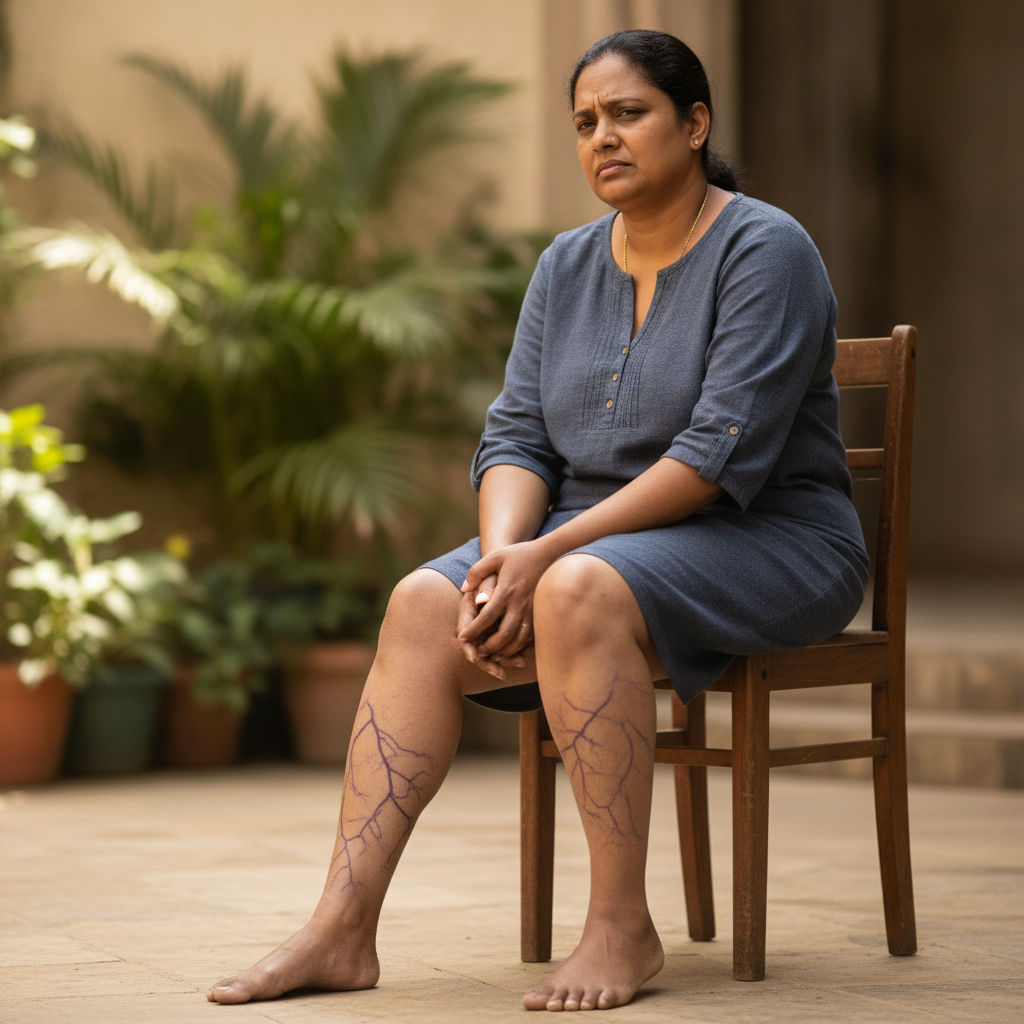
Overview
Varicose veins are enlarged, twisted veins, usually in the legs. They occur when the valves inside the veins, which are meant to ensure blood flows towards the heart, become weak or damaged. This leads to blood pooling in the veins, causing them to swell and become visible. In Ayurveda, this condition is known as Sirajala (meaning network of veins) or Raktavrita (meaning vitiated blood in veins).
The Ayurvedic perspective attributes varicose veins to an imbalance of Vata dosha, which governs movement in the body. Aggravated Vata can impair the function of the venous valves and lead to blood stasis. Factors contributing to this imbalance include poor diet, lack of physical activity, prolonged standing or sitting, constipation, and aging.
Ayurvedic treatments focus on pacifying Vata dosha through herbal medicines, dietary modifications, lifestyle changes, and Panchakarma therapies like Basti (enema) and Virechana (purgation). Local applications of medicated oils and pastes are also used to reduce swelling and pain.
Causes According to Ayurveda
- 🔥 Vitiation of Vata dosha, particularly Apana Vayu, leading to impaired venous valve function and blood stasis.
- 🧘 Prolonged standing or sitting.
- 🚶 Lack of physical activity.
- 🍎 Improper diet, including excessive consumption of dry, cold, or pungent foods.
- 🚽 Constipation.
- ⚖️ Obesity.
- ⏳ Aging.
Signs & Symptoms Recognised in Ayurveda
- 🦵 Sirajala — Network of veins, characterized by dilated, tortuous veins, typically affecting the lower limbs.
- 🩸 Raktavrita — Blood vitiated within veins, leading to blood pooling and stagnation.
- ⬆️ Swelling in the affected veins.
- 😖 Pain and discomfort in the legs.
- ⚖️ Heaviness in the legs.
Herbs & Natural Substances
Therapeutic Approaches in Ayurveda
Ayurvedic management for Sirajala/Raktavrita focuses on pacifying the aggravated Vata dosha and improving blood circulation. Internal herbal medicines are crucial, with herbs like Guggulu, Manjistha, Punarnava, Arjuna, Ashwagandha, and Pippali being commonly recommended for their Vata-pacifying, blood-purifying, and circulatory-enhancing properties. Triphala may be used to address constipation, a common contributing factor.
Panchakarma therapies play a significant role in detoxification and Vata pacification. Basti (medicated enemas) are particularly emphasized for their ability to cleanse the colon and directly pacify Vata. Virechana (purgation) may also be employed to eliminate excess Pitta and Ama (toxins) that can obstruct circulation.
Local applications of medicated oils and pastes are also utilized to manage the symptoms of varicose veins. These external applications help to reduce swelling, pain, and inflammation in the affected areas, providing symptomatic relief and supporting venous health.
Dietary Guidance
✓ Favour
- Warm, nourishing foods — Easily digestible and grounding, to pacify Vata.
- Cooked vegetables — Especially root vegetables, which are grounding.
- Whole grains — Such as rice and oats, which are easy to digest.
- Healthy fats — Like ghee and sesame oil, in moderation.
✗ Avoid
- Cold foods and drinks — As they aggravate Vata.
- Dry foods — Such as crackers and dry cereals, which can increase Vata.
- Pungent foods — Including excessive chili and strong spices.
- Processed foods — Which are often difficult to digest and can imbalance doshas.
- Excessive caffeine and alcohol — As they can dehydrate and aggravate Vata.
Lifestyle & Daily Routine
- 🧘 Regular, moderate exercise — To improve circulation and pacify Vata.
- 🚶 Avoid prolonged standing or sitting — Take breaks to move and stretch.
- ⚖️ Maintain a healthy weight — To reduce pressure on the veins.
- 🚽 Prevent and manage constipation — Ensure regular bowel movements.
- ⬆️ Elevate legs when resting — To aid venous return.
- 🛌 Establish a regular daily routine — Including consistent sleep and meal times.
- 💨 Avoid exposure to excessive wind and cold — As these aggravate Vata.
Community Experiences
Share your personal experience with Ayurveda for Varicose Veins. All experiences are reviewed before being published.
Have you tried Ayurveda for this condition?
Login to share your experience and help others on their wellness journey.
Login to Share