Hair FallKhalitya — classical name in Ayurveda
See all treatment approaches for Hair Fall →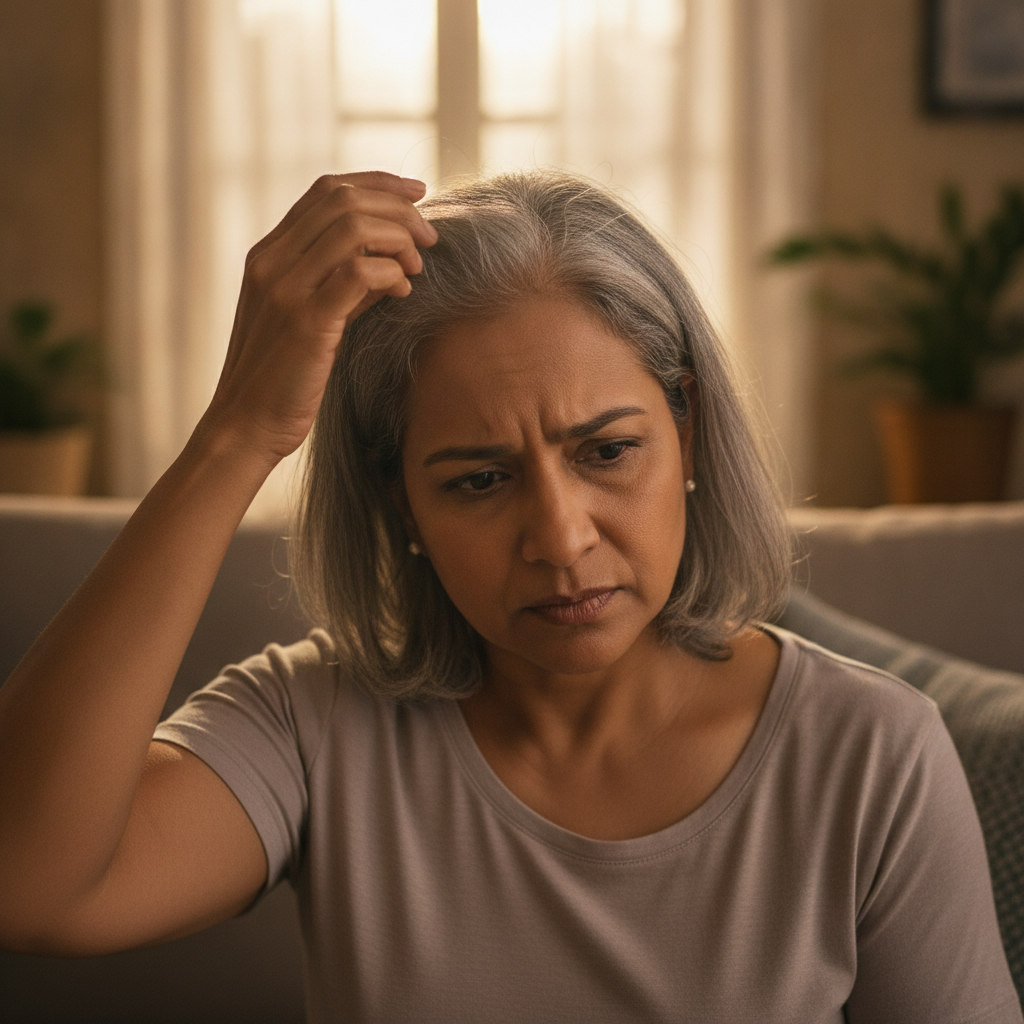
Overview
Khalitya, the classical Ayurvedic term for hair fall or alopecia, describes a condition where hair is lost prematurely, potentially leading to baldness. This condition is understood in Ayurveda as a result of imbalances in the bodily energies, or doshas.
The primary cause is believed to be the vitiation of Vata dosha, which governs movement and dryness, affecting the hair follicles and roots. Pitta dosha, associated with heat and transformation, can also become aggravated and contribute to the condition, sometimes along with Kapha dosha, which relates to structure and lubrication.
Ayurvedic principles view Khalitya not just as a localized scalp issue but as a manifestation of deeper systemic imbalances. Factors such as genetic predisposition, hormonal fluctuations, chronic stress, inadequate nutrition, and improper hair care practices are recognized as contributing elements that can trigger or exacerbate these doshic imbalances.
Ayurvedic management of Khalitya adopts a holistic approach, aiming to pacify the aggravated doshas, nourish the hair follicles, and stimulate regrowth. This involves a combination of herbal remedies, specialized detoxification and rejuvenation therapies (Panchakarma), and significant lifestyle modifications to restore overall health and promote healthy hair growth.
Causes According to Ayurveda
- 🔥 Vitiation of Vata dosha, affecting hair follicles and roots.
- 🔥 Aggravation of Pitta dosha, contributing to heat-related hair issues.
- 🔥 Aggravation of Kapha dosha, potentially affecting hair structure.
- 🔥 Genetic predisposition.
- 🔥 Hormonal imbalances.
- 🔥 Stress and mental fatigue.
- 🔥 Poor nutrition and inadequate intake of essential nutrients.
- 🔥 Improper hair care practices, including the use of harsh chemicals.
Signs & Symptoms Recognised in Ayurveda
- 🌡️ Khalitya — Premature hair loss from the scalp.
- 🌡️ Alopecia — Development of bald patches or thinning hair.
- 🌡️ Premature greying of hair.
- 🌡️ Weak hair roots and increased hair breakage.
Herbs & Natural Substances
Therapeutic Approaches in Ayurveda
Ayurvedic management of Khalitya involves a multi-pronged strategy focused on balancing the aggravated doshas and revitalizing the hair follicles. Internal medications, often in the form of herbal formulations, are prescribed to pacify Vata and Pitta doshas and to provide essential nutrients for hair growth.
Panchakarma therapies, such as Shirodhara (pouring of warm oil on the forehead) and specialized head massages (Abhyanga), may be recommended. These therapies aim to calm the nervous system, improve circulation to the scalp, and cleanse the body of toxins that may contribute to hair loss.
Topical applications are also a significant part of the treatment. Herbal oils, pastes, and decoctions are applied to the scalp to strengthen the hair roots, nourish the follicles, and stimulate new hair growth. These external treatments often utilize herbs known for their hair-promoting properties.
Lifestyle and dietary adjustments are considered crucial for long-term management and prevention. Stress reduction techniques, adequate sleep, and a balanced diet rich in vitamins and minerals are emphasized to support overall health and hair vitality.
Dietary Guidance
✓ Favour
- Fresh fruits and vegetables — Provide essential vitamins and minerals.
- Whole grains — Offer sustained energy and nutrients.
- Legumes — Good source of protein, vital for hair structure.
- Dairy products (like yogurt and milk) — Can be nourishing.
- Nuts and seeds — Provide healthy fats and minerals.
✗ Avoid
- Excessive spicy, sour, and salty foods — Can aggravate Pitta dosha.
- Processed and fried foods — Lack nutritional value and can be heavy.
- Alcohol and excessive caffeine — Can dehydrate and disrupt doshic balance.
Lifestyle & Daily Routine
- 🧘 Practice stress management techniques like meditation and yoga.
- 🧘 Ensure adequate and restful sleep each night.
- 🧘 Avoid excessive exposure to heat and sun.
- 🧘 Maintain a regular daily routine (Dinacharya).
- 🧘 Use mild, natural hair care products.
- 🧘 Gently massage the scalp to improve circulation.
Traditional Preparations
Bhringraj Oil for Scalp Massage
Gently heat the oil in a pan. Add the crushed Bhringraj leaves and simmer on low heat until the leaves turn dark brown and brittle. Strain the oil through a fine cloth, pressing out as much oil as possible. Store in an airtight container.
Gently massage a small amount of the warm oil onto the scalp and hair roots. Leave it on for at least 30 minutes, or overnight, before washing off with a mild shampoo. Use twice a week for hair fall and Khalitya relief.
Amla and Shikakai Hair Wash Powder
Combine all the powders in a bowl and mix well. Store in an airtight container.
Take 2-3 tablespoons of the powder and mix with warm water to form a paste. Apply this paste to wet hair, lather gently, and rinse thoroughly. Use as a natural shampoo for hair fall and Khalitya management.
Community Experiences
Share your personal experience with Ayurveda for Hair Fall. All experiences are reviewed before being published.
Have you tried Ayurveda for this condition?
Login to share your experience and help others on their wellness journey.
Login to Share