AcneYauvanpidika / Tarunya-pidika — classical name in Ayurveda
See all treatment approaches for Acne →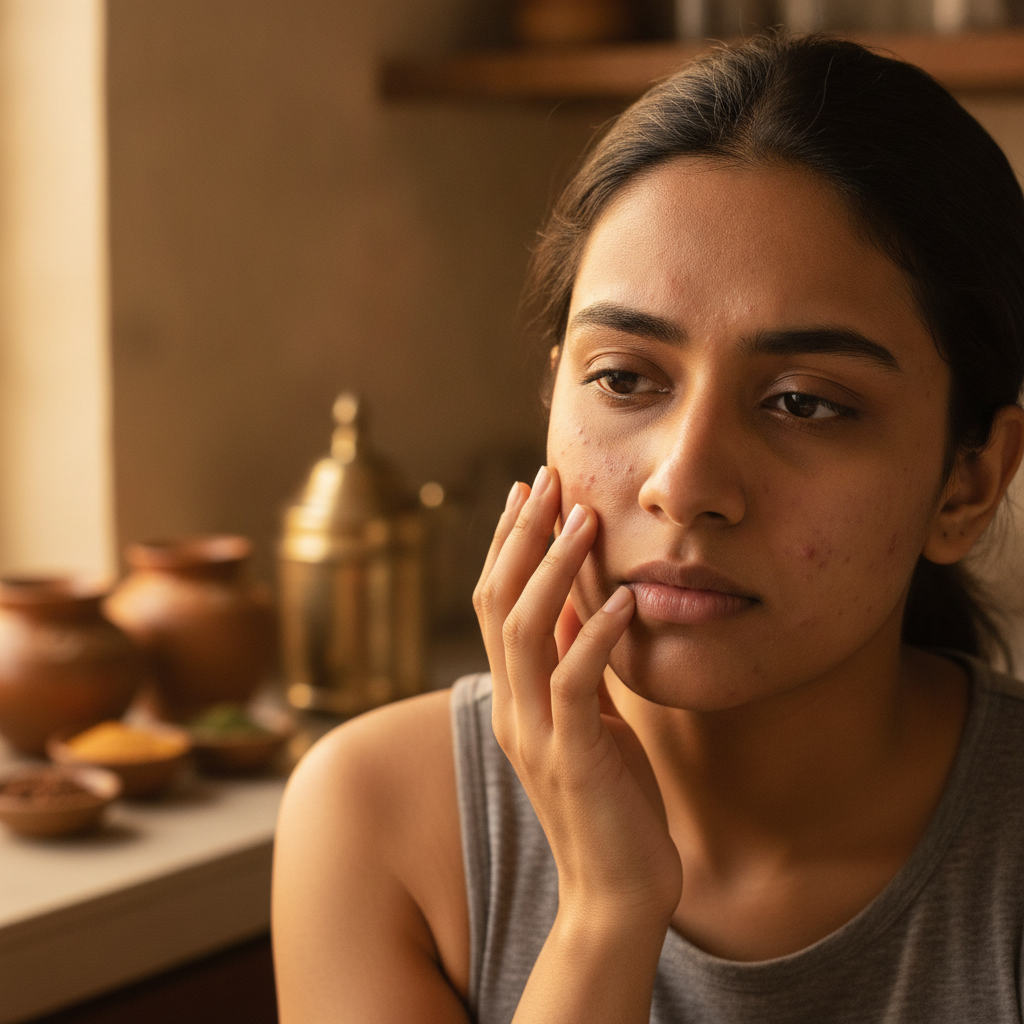
Overview
Acne vulgaris, known in Ayurveda as Yauvanpidika or Tarunya-pidika, is a common ailment affecting the pilosebaceous unit, typically manifesting as eruptions during youth. It is characterized by comedones, papules, pustules, nodules, and cysts, predominantly on the face, chest, and back.
From an Ayurvedic standpoint, acne arises from imbalances in the doshas, particularly Kapha and Pitta. These imbalances can be triggered by various factors including diet, stress, and hormonal fluctuations. The vitiation of these doshas leads to the obstruction of bodily channels (srotas) and the subsequent formation of skin eruptions.
Ayurvedic treatment strategies aim to pacify the aggravated doshas, purify the blood (rakta dhatu), and improve digestive fire (agni). This holistic approach often involves a combination of internal and external therapies, dietary modifications, and lifestyle adjustments to restore overall balance and promote healthy skin.
Causes According to Ayurveda
- 🔥 Vitiation of Kapha dosha, leading to obstruction and eruptions.
- 🔥 Aggravation of Pitta dosha, contributing to inflammation and redness.
- 🔥 Improper diet, including oily, spicy, and fried foods.
- 🔥 Stress and hormonal imbalances.
- 🔥 Poor hygiene.
- 🔥 Excessive intake of spicy, oily, and fermented foods.
- 🔥 Hormonal fluctuations.
Signs & Symptoms Recognised in Ayurveda
- 🌡️ Pidika (eruptions) — characterized by comedones (blackheads and whiteheads).
- 🌡️ Papules — small, red, tender bumps.
- 🌡️ Pustules — pimples with pus at their tips.
- 🌡️ Nodules — large, solid, painful lumps beneath the skin.
- 🌡️ Cysts — painful, pus-filled lumps beneath the skin.
- 🌡️ Primarily affects adolescents and young adults.
- 🌡️ Commonly seen on the face, chest, and back.
Herbs & Natural Substances
Therapeutic Approaches in Ayurveda
Ayurvedic treatment for Yauvanpidika focuses on pacifying the aggravated Kapha and Pitta doshas, purifying the blood (rakta shodhana), and improving digestion (agni). Internal therapies often involve oral administration of herbs known for their blood-cleansing and anti-inflammatory properties. These herbs work systemically to address the root cause of the eruptions.
External applications are also a significant part of the treatment. Pastes, oils, or decoctions made from herbs like Neem, Turmeric, and Sandalwood are applied topically to soothe inflammation, reduce redness, and combat bacterial growth associated with acne lesions.
Panchakarma, a set of detoxification procedures, may be recommended in some cases to eliminate deep-seated toxins and restore doshic balance. These procedures are tailored to the individual's constitution and the severity of the condition, aiming for a comprehensive cleansing of the body.
Dietary Guidance
✓ Favour
- Bitter vegetables (e.g., bitter gourd) — helps pacify Pitta.
- Leafy greens — supports detoxification.
- Light, easily digestible foods — promotes good agni.
- Cooling foods — helps balance Pitta.
✗ Avoid
- Oily foods — aggravates Kapha and Pitta.
- Spicy foods — aggravates Pitta.
- Fried foods — increases Kapha and Pitta.
- Fermented foods — can aggravate Pitta.
- Excessive sour foods — can aggravate Pitta.
- Heavy, difficult-to-digest foods — increases Kapha.
Lifestyle & Daily Routine
- 🧘 Maintain a regular daily routine.
- 🧘 Practice stress-reducing techniques like meditation or yoga.
- 🧘 Ensure adequate sleep.
- 🧘 Avoid excessive exposure to heat.
- 🧘 Maintain good personal hygiene.
- 🧘 Engage in moderate physical activity.
- 🧘 Avoid suppressing natural urges.
Traditional Preparations
Turmeric and Neem Paste for Topical Application
Mix turmeric powder and neem powder in a bowl. Gradually add rose water or plain water to form a smooth paste. Apply the paste directly to the affected areas of the skin.
Apply the paste to acne spots and leave it on for 15-20 minutes before gently washing off with lukewarm water. Can be used for Yauvanpidika / Tarunya-pidika relief.
Manjistha Decoction for Blood Purification
Boil Manjistha powder in 2 cups of water. Simmer gently until the water reduces to about half a cup. Strain the decoction.
Drink the warm decoction once daily to support blood purification for acne (Yauvanpidika / Tarunya-pidika).
Community Experiences
Share your personal experience with Ayurveda for Acne. All experiences are reviewed before being published.
Have you tried Ayurveda for this condition?
Login to share your experience and help others on their wellness journey.
Login to Share